
For most of Canada’s history, the North was the place infrastructure reached last. Roads stopped short of it, power grids did not extend to it, and the systems that kept the rest of the country running arrived slowly, if at all. That is changing, and quickly. A warming, more accessible, and more contested Arctic has moved the North from the edge of the national agenda to the centre of it. But the more important question for anyone who builds and integrates technology is not that Canada is investing in Arctic infrastructure. It is what the Arctic demands of that infrastructure once it arrives.
A Changing National Priority
The shift shows up in policy before it shows up on the ground. In late 2024, Canada set out its Arctic Foreign Policy, placing sovereignty, security, and Northern development at the heart of its national interest. Investment has followed. In late 2025, the government committed one billion dollars to strengthen the North’s trade and transportation infrastructure, and through 2026 it advanced concrete projects beneath that commitment, including 405 million dollars through the Arctic Infrastructure Fund to build an all-season connection along the Mackenzie Valley, replacing a route that today depends on the season and the ice. Defence has moved in the same direction, with a multi-billion-dollar commitment to Arctic over-the-horizon radar that will detect and track activity approaching Canada’s northern approaches.
Different departments, different budgets, one theme. Each of these depends on infrastructure that has to work in one of the most demanding operating environments on earth. The difficulty is not the decision to build. It is the conditions the build has to survive.
The Arctic Raises the Bar on Everything
Infrastructure that performs reliably in southern Canada can struggle in the Arctic, because the Arctic changes the meaning of almost every requirement. Cold is not just cold; it stresses materials, batteries, and electronics well past the limits most equipment is rated for. Distance is not just distance; it means a technician may be hundreds of kilometres and several days away when something fails. Construction and resupply seasons are short, so a missed window can cost a year. And connectivity cannot be assumed. In much of the region it is thin, and in places it does not exist at all.
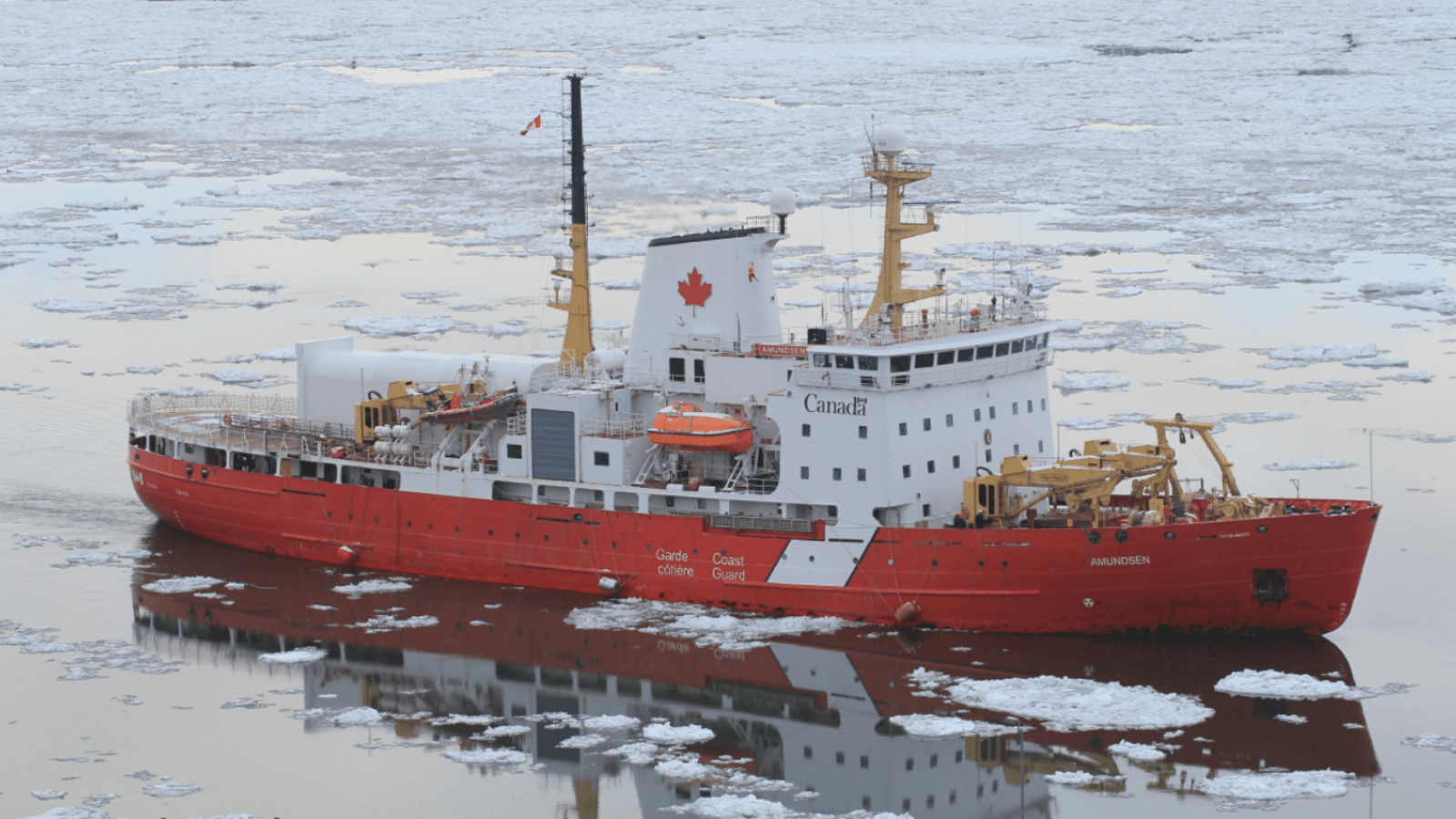
Canada’s own institutions describe the constraint plainly. The Canadian Coast Guard’s Arctic Strategy notes that unpredictable ice conditions and limited nautical charts create risks to safe navigation, and that the vastness and remoteness of the region bring a lack of modern charting, critical infrastructure, connectivity, and local response capacity. As Coast Guard operations shift from seasonal toward year-round, and as vessel traffic from shipping, tourism, and resource development rises, the systems supporting that presence have to hold up continuously, not only in the open-water months.
Felix Technology’s experience in marine, navigation, and coastal systems offers a practical perspective on this challenge, particularly where equipment has to keep operating reliably in remote and demanding environments.
The Limits of Component Thinking
The instinct, when conditions get harder, is to make each part stronger: a tougher enclosure, a more rugged sensor, a larger battery. That matters, but it is not where Arctic projects succeed or fail. In the North, resilience is a property of the whole, not of any single piece.
Consider what it takes to keep one navigation aid working through an Arctic winter. The beacon is the visible part, but it depends on a power source that has to survive the cold, a communications link that has to reach it, and a monitoring capability that has to report its status from a place with almost no one nearby. A gap in any one of those, and the asset is effectively dark. And in the Arctic, a dark navigation aid or a dropped communications link is a safety problem before it is a commercial one.
The same logic scales up. A year-round Coast Guard presence, a new surveillance capability, an all-season corridor: each is not one asset but many interdependent systems that only deliver value when they perform together. That is why building in the Arctic is not simply a procurement exercise. It is fundamentally a systems integration challenge. In many cases, the individual technologies already exist. Making power, communications, navigation, monitoring, and control remain reliable as one connected whole, in an environment that punishes every weak link, is the difficult and decisive work.
The Role of Systems Integration in Arctic Infrastructure
As Canada turns its attention and its budgets northward, the organizations that matter most will not only be those that supply advanced technology. They will be the ones that can integrate it so it performs, and sustain it so it keeps performing, in conditions that leave no room for a fragile link. Felix Technology approaches the North from that position, as a Canadian systems integrator that selects technology on merit and engineers it to meet Canada’s operational, regulatory, and lifecycle requirements, including some of the harshest of them.
The Arctic is raising the bar for infrastructure. Meeting it will depend less on any single breakthrough, and more on how well the pieces are made to work together.